
ZIP 33133
Coconut Grove, Coral Gables and South Miami
Coconut Grove
See ZIP 33133Gutter cleaning means clearing the debris out of the trough, removing the buildup along the roof edge, and flushing the downspouts so water leaves the house. Fast Pro does it by hand, bags everything, and sends photos of the finished work to Miami homeowners.
Serving Miami, FL homeowners. 6+ years of experience. 500+ jobs completed. Last updated .
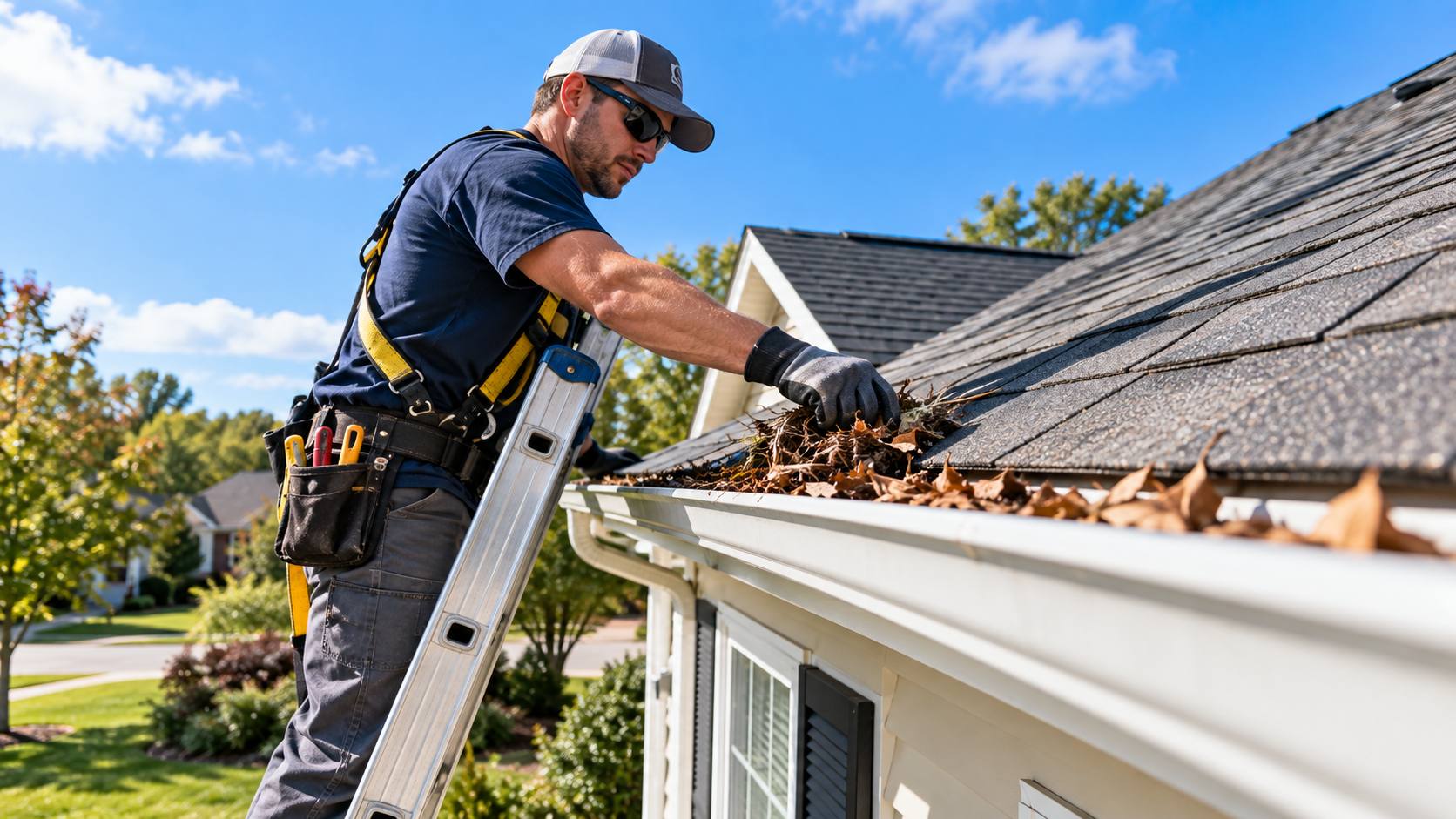
Every gutter cleaning includes
Free inspectionMiami homes often have gutters only over entries, garages and patios, so each run carries the water from a large roof. We clear every run by hand, bag the debris, flush the downspouts and photograph the result.
Most guides to gutter cleaning assume a house with gutters on every edge. Many Miami houses shed water straight off the roof, so gutters show up in sections: over the front door, along a garage, around a patio, or on one slope that once leaked. Those short runs still collect the runoff from a big roof, and when one clogs, the overflow lands on the doorstep or the walkway.
The debris here is different too. Palm fronds and their fiber, mango and ficus leaves, blooms and long seed pods from trees such as royal poinciana, and the fine grit that sheds from tile all end up in the trough. In summer, Saharan dust adds a gray layer that turns to paste with the first rain. After a named storm the trough can hold a thick mat of shredded leaves that was not there a week earlier.
Timing matters more than a twice-a-year rule. The wet season starts on May 15, so early May is the visit that counts. A second visit between mid-October and December clears what hurricane season left behind, and any named storm is a reason for a quick check.
Where the downspouts end matters as well. Much of Miami-Dade is low-lying and rain has few places to go, so we look at whether each downspout drops water at the foundation, onto a slope that carries it away, or into a drain, and we tell you what we see.
Gutters collect different things depending on the trees around the house, the age of the roof, and the season.
| Debris | Where it comes from | Why it matters |
|---|---|---|
| Leaves and twigs | Trees overhead | They pack the trough and block the downspout outlet. |
| Seed pods and blooms | Flowering trees and shrubs | They rot into a heavy sludge that holds water. |
| Fibers and needles | Palms, pines, and grasses | They knot together and lodge at the first downspout elbow. |
| Pollen paste | Spring pollen mixed with rain | It dries into a crust on the floor of the trough. |
| Roof grit | Granules shed by asphalt shingles and tile | It hardens and slows drainage. |
| Nests and trash | Animals and wind | They block flow and hold standing water. |
Seven steps, in this order, on every house.
Ladders go on firm, level ground at the angle NIOSH recommends, with stabilizers on two-story homes.
Debris along the lower edge of the roof and in the valleys comes off first, so it does not wash into a clean trough.
Gloved hands and scoops clear the full length of the trough, including corners and end caps.
Everything that comes out goes into bags and into the truck. Nothing is left in your beds or on the lawn.
Water runs through each downspout until the flow is steady. A clear trough over a blocked downspout still overflows.
We look for loose hangers, leaking seams, and soft fascia behind the gutter, and photograph anything we find.
You get before and after photos and a plain note on what we saw.
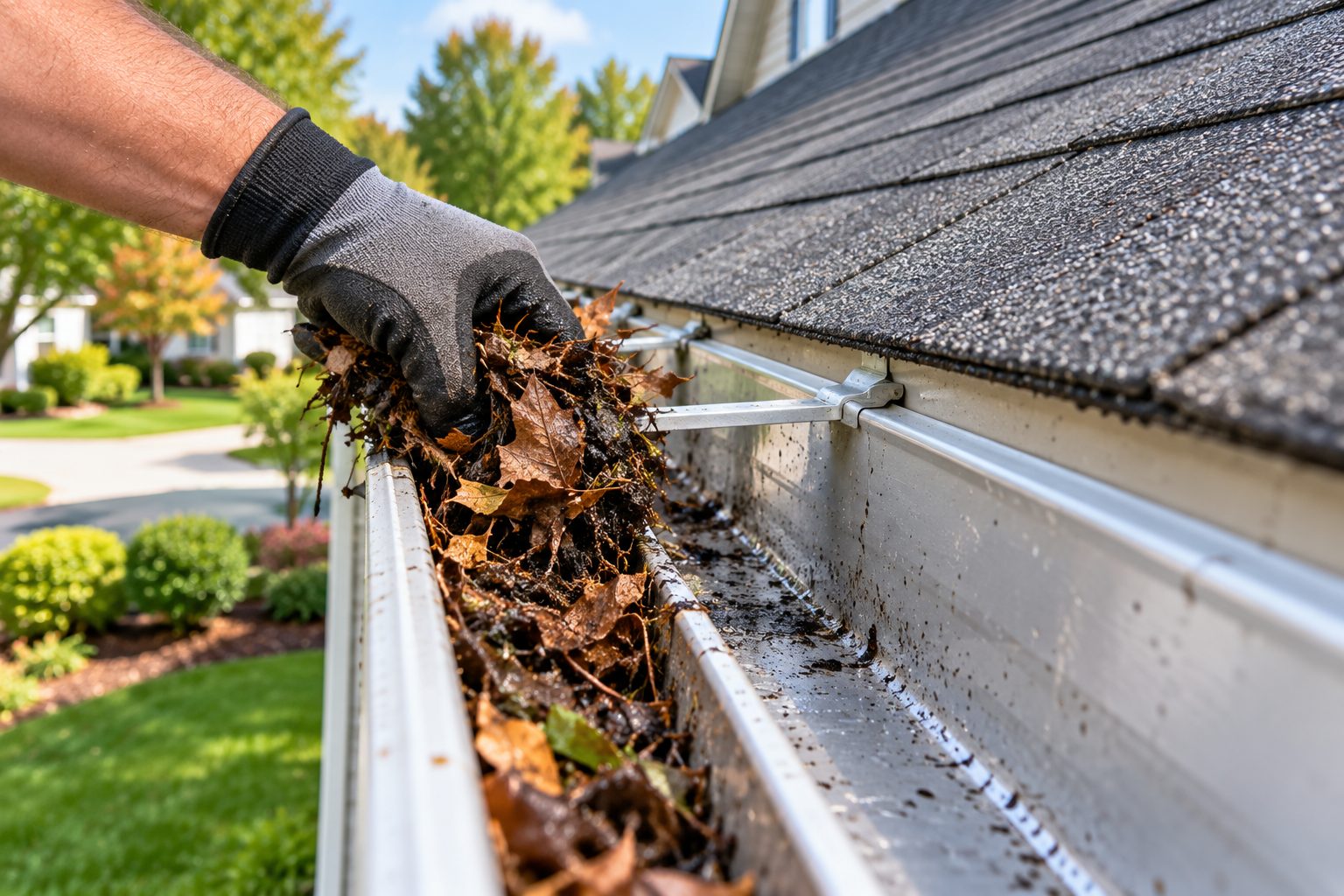
Every run is cleared by hand, then flushed with water.
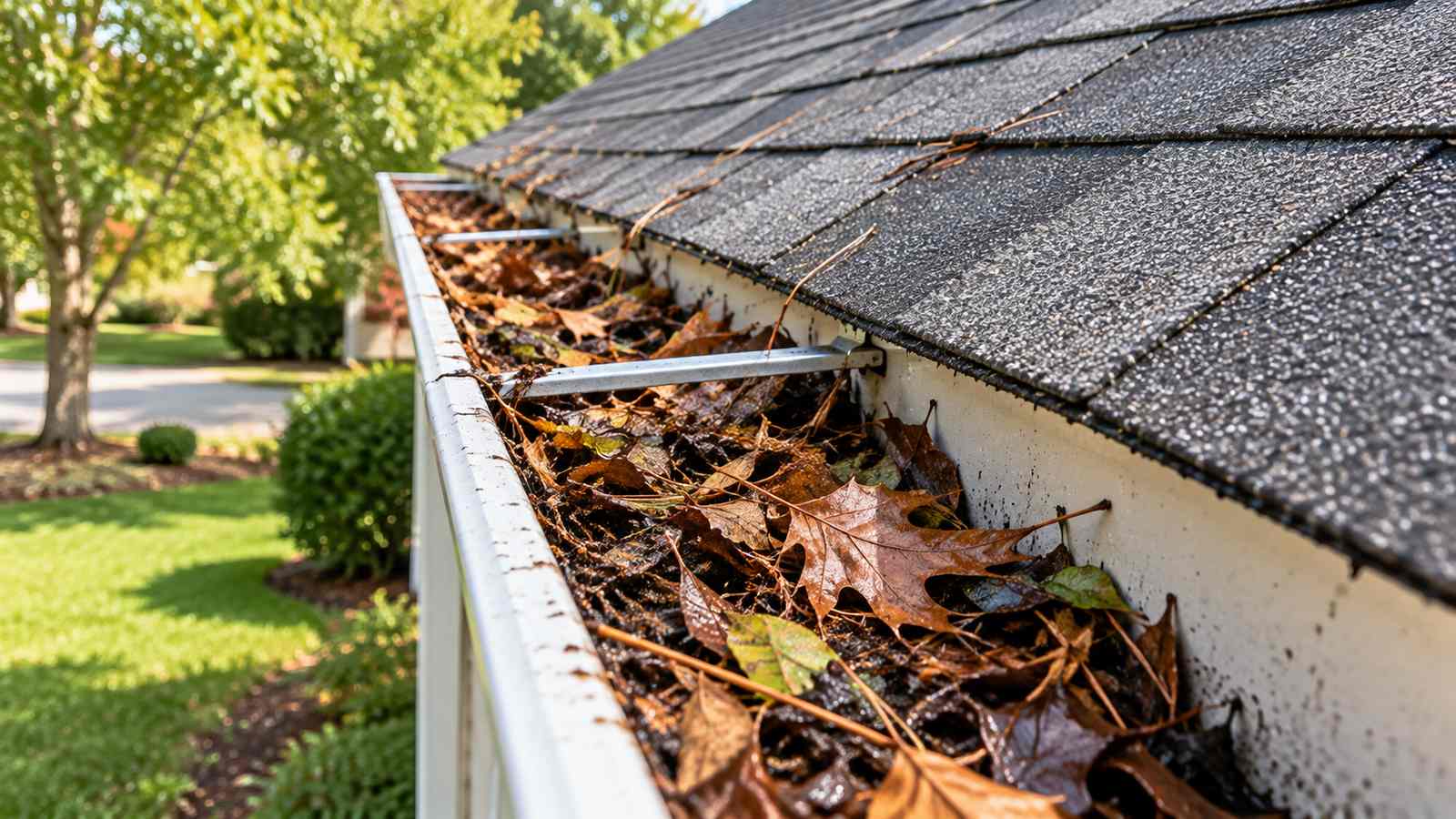
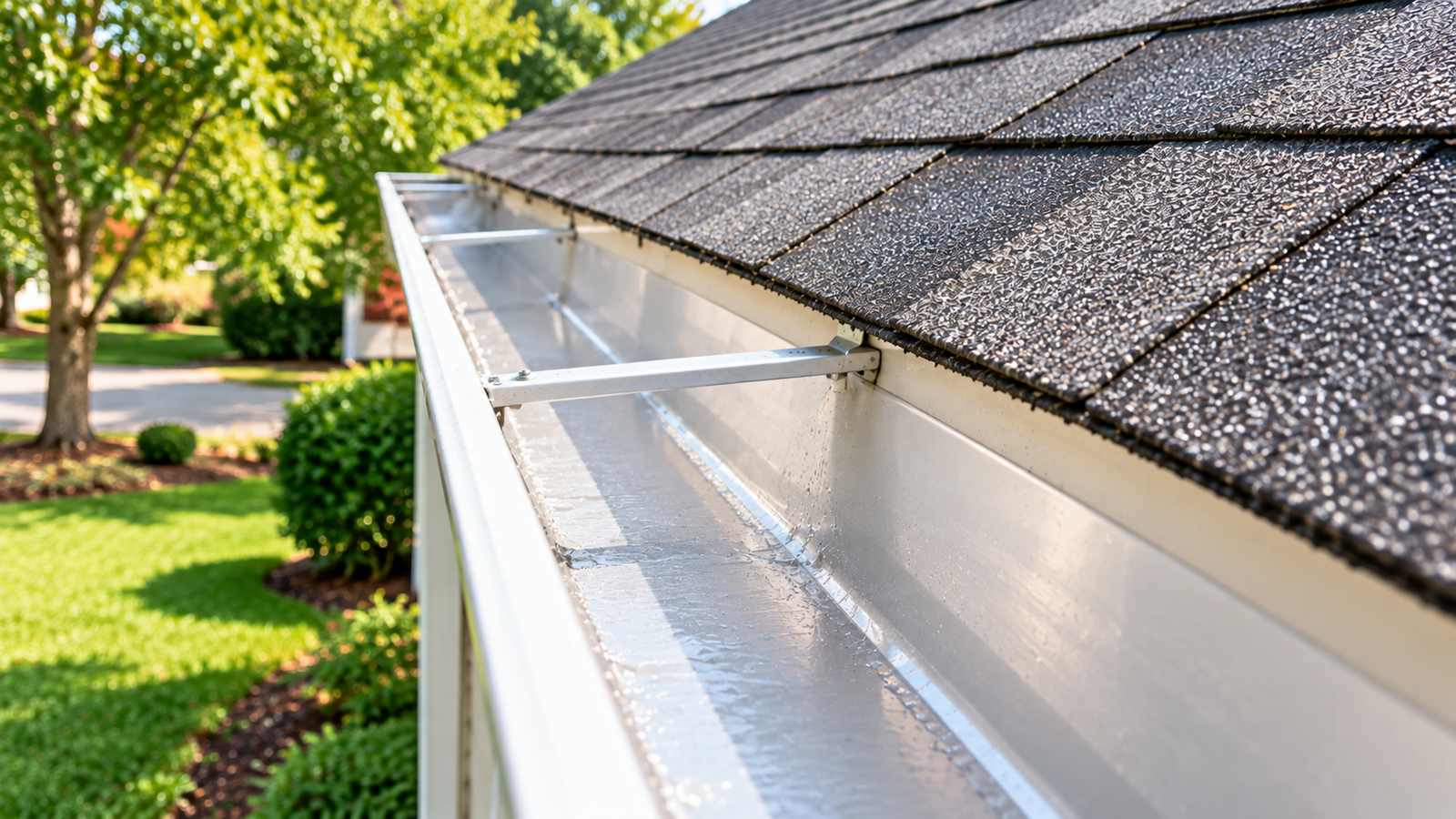
The same run of gutter, photographed from the same spot before and after.
Pick your ZIP code to see the neighborhoods we cover, or call and we will confirm your street.
Coconut Grove, Coral Gables and South Miami
Coconut Grove
See ZIP 33133Coconut Grove, Coral Gables and South Miami
Coral Gables, Coral Way
See ZIP 33134Coconut Grove, Coral Gables and South Miami
South Miami, Glenvar Heights
See ZIP 33143Pinecrest, Kendall and the south
Pinecrest
See ZIP 33156Pinecrest, Kendall and the south
Kendall
See ZIP 33176Pinecrest, Kendall and the south
Kendall West
See ZIP 33186Not sure we cover your ZIP code? Call us at (813) 856-2726.
The price depends on the feet of gutter, the number of stories, how packed the runs are and whether guards are installed. Many Miami homes have only short gutter runs over entries and garages, which keeps the job smaller. Call with your ZIP code and we quote by phone.
It depends on the roof size, the material, the pitch and how much algae is on it. A one-story tile roof and a two-story flat roof are different jobs. Tell us the roof type and the stories and we quote by phone.
Early May matters most, before the wet season starts on May 15. A second visit between mid-October and December clears the debris left by hurricane season.
Every two to three years suits most roofs. Shaded slopes and roofs under trees grow algae sooner.
Yes. Storms leave fronds, branches and shredded leaves on the roof and in the trough. After a named storm we move cleanups to the front of the schedule and flush every downspout.
Not always. Many Miami homes shed water from the roof edge. If you have gutters or downspouts, we clean them. If you do not, a roof wash and a check of the drains and the ground along the drip line still protect the house.
Pressure is the risk. Tile makers' care guides cap cleaning pressure at about 1,200 psi and warn that some cleaners can etch concrete. We use a soft wash and a concrete-compatible cleaner, and we step only where tiles overlap.
Twice a year is the minimum: early May, before the wet season, and again between mid-October and December. Add a check after any named storm, and more visits if trees overhang the roof.
Within a day or two. Debris left in the trough turns to sludge in the heat and holds water, and the next storm arrives on top of it.
Corners and downspout outlets are where leaf mats and palm fiber collect first. A heavy downpour shows the blockage there, even when the middle of the run looks fine.
Call and tell us your ZIP code and what the gutters look like. We quote it by phone and find a day that works.
Call (813) 856-2726